عبادت پنهانى
أعْظَمُ العِبادَةِ أجْراً أخْفاها.
پُراجرترین عبادات، مخفيانهترینِ آنها است
The worship deserving of the greatest reward is that which is most discreetly performed.
قرب الإسناد، ص 135، ح 475
1. A series of interconnected computers and databases around the world [No answer]
internet
2. A part of a website that can be read on a computer screen [No answer]
web page
3. The first page that you can see when you look at a website [No answer]
home page
4. A piece of equipment that is used to send information from a computer through a telephone system [No answer]
modem
5. To copy computer programs or information electronically [No answer]
download
6. A connection between documents on areas on the internet [No answer]
link
7. www is an internet address which stands for [No answer]
world wide web
8. To press the button on a computer mouse [No answer]
click
9. To organize and design the words on a page or written document [No answer]
format
10. A computer program which allows you to look at pages on the internet [No answer]
browser
=> He pretended his name was John.| DIRECT SPEECH | INDIRECT SPEECH |
| simple present | simple past |
| present progressive | past progressive |
| present perfect | past perfect |
| simple past | past perfect |
| will | would |
I) What is a countable noun?
a) It is a noun which is for things we can count.
Examples of countable nouns: table, bag, school
We can say: one table, two tables... one bag, two bags...
b) It usually has a plural form:
Examples: table > tables | bag > bags | school > schools
II) What is an uncountable noun?
a) It is a noun which is for things we cannot count.
Examples of uncountable nouns: tea, sugar, water, air, rice.
b) Uncountable nouns are
often the names for abstract ideas or qualities.
Examples: knowledge, beauty, anger, fear, love.
c) They usually do not have a plural form. They
are used with a singular verb.
Examples: we cannot say "sugars, angers, knowledges".
d) We cannot use a/an with these nouns.
To express a quantity of one of these nouns, we use a word or expression
like:
some, a lot of,
a piece of, a bit of,
a great deal of...
Examples:
He gave me a great deal of advice
before my interview.
They've got a lot of furniture.
III) TEST
What have you understood?
Write the letter "C" in front of Countable nouns and the
letter "U" in front of Uncountable nouns.
The first one has been done for you:
___U_____ water
_________ boat
_________ record
_________ money
_________ tree
_________ furniture
_________ evidence
_________ TV set
_________ happiness
_________ bottle
_________ wall
_________ garden
_________ advice
_________ baggage
_________ information
_________ window
_________ news
A/ We use both/ neither/ either for two things. You can use these words with a noun (both books, neither book etc.).
For example, you are talking about going out to eat this evening. There are two restaurants where you can go. You say:
• Both restaurants are very good, (not 'the both restaurants')
• Neither restaurant is expensive.
• We can go to either restaurant. I don't mind, (either = one or the other, it doesn't matter which one)
B/ Both of... / neither of... / either of...
When you use both/ neither/ either + of, you always need the... / these/ those... / my/ your/ his/
Tom's... (etc.). You cannot say 'both of restaurants'. You have to say 'both of the restaurants', 'both of those restaurants' etc.:
• Both of these restaurants are very good.
• Neither of the restaurants we went to was (or were) expensive.
• I haven't been to either of those restaurants. (= I haven't been to one or the other) You don't need of after both. So you can say:
• Both my parents are from London, or Both of my parents...
You can use both of / neither of / either of + us/you/them:
• (talking to two people) Can either of you speak Spanish?
• I asked two people the way to the station but neither of them knew.
You must say 'both of before us/ you/ them (of is necessary):
• Both of us were very tired, (not 'Both us were...')
After neither of... a singular or a plural verb is possible:
• Neither of the children wants (or want) to go to bed.
C/ You can also use both/ neither/ either alone:
• I couldn't decide which of the two shirts to buy. I liked both, (or I liked both of them.)
• 'Is your friend British or American?' 'Neither. She's Australian.'
• 'Do you want tea or coffee?' 'Either. I don't mind.'
D/ You can say:
Both... and...: Both Ann and Tom were late. I was both tired and hungry when I arrived home.
Neither... nor...: Neither Liz nor Robin came to the party. She said she would contact me but she neither wrote nor phoned.
Either... or...: I'm not sure where he's from. He's either Spanish or Italian. Either you apologise or I'll never speak to you again. |
|
|
A) Fill in these sentences with WHO, WHICH, WHERE or WHOSE B) Build 1 sentence with these 2 sentences (use a relative clause): |
|
1. who 2. which 3. whose 4. John is speaking to his boss, who is a famous writer. 5. I like the town where you live. 6. I like the painting which is in this room. |
www.tolearnenglish.com
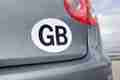
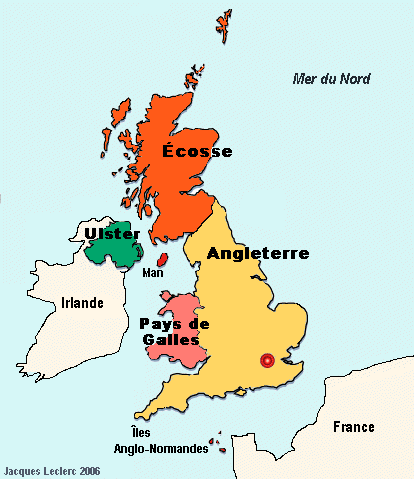
Great Britain is composed of three countries: England, Scotland and Wales



(2002)
United Nations International Children's Emergency Fund



People with perseverance will be successful in life.
A noun is a word that names a person, place or thing. It also one of the eight parts of speech. Examples: man, city, book, courage. Nouns often follow words like a, an, and the.
Instructions: Pick out all the nouns in these sentences.
1. The teacher told the student that a person should always be loyal.
2. People with perseverance will be successful in life.
3. I bought a new pen at the drugstore across the street.
4. The man said to the policeman that he had not seen the accident.
--For answers scroll down.
Answers:
1. teacher, student, person
2. people, perseverance, life
3. pen, drugstore, street
4. man, policeman, accident
http://www.dailygrammar.com/archive.html#Subject
Everyone likes an ________ person.
Bob wasn’t thinking __________.
That is a __________ animal.
Sara sings __________ well.
You speak English __________.
Your English is __________.
The police __________ inspected the car.
The police made a __________ inspection of the car.
You __________ are smart.
Are you __________?
Margaret made a fresh salad. She peeled a yellow banana. She peeled a red apple. She peeled a green cucumber. She peeled an orange carrot. She peeled a brown potato. She peeled a white onion. She peeled a white egg. She chopped everything up with a sharp knife. She chopped everything into little pieces. She used her sharp knife to chop up the banana, apple, cucumber, carrot, potato, onion, and egg. She chopped up a tomato. She put all the little pieces into a bowl. She opened a bottle of salad dressing. She poured salad dressing on her fresh salad.
| 1. | At dinner she annoyed me by (smoke) . |
| 2. | Did you advise him (go) to the police? |
| 3. | Did you remember (book) seats for the cinema tomorrow? |
| 4. | Don't keep him (stand) at the door. |
| 5. | He decided (disguise) himself. |
| 6. | He hates (be) kept waiting.. |
| 7. | He made me (do) the same things. |
| 8. | He offered (lend) me money. |
| 9. | I can hear the bell (ring) . |
| 10. | I don't like (get) bills. |
| 11. | I suggest (leave) him here. |
| 12. | I wish (be) a manager. |
| 13. | I'm for (do) nothing till the evening. |
| 14. | It is nice (sit) in the garden at night. |
| 15. | She apologized for (be) late. |
| 16. | The fire seems (be) out. |
| 17. | This book tells you how (win) at chess. |
| 18. | We watched them (jump) from a window. |
| 19. | Would you like (keep) the tickets? |
| 20. | You don't need (ask) me to go out. |
| 1. | You can sit the table. Lunch is ready. |
| 2. | What's wrong Jane today? She looks so sad. |
| 3. | What time do you get up Sundays? |
| 4. | What do you usually do the weekends? |
| 5. | Today is the 17th September. |
| 6. | This birthday present is your brother. |
| 7. | There are many stories monsters. |
| 8. | There are four us in the family. |
| 9. | She goes the cinema every month. |
| 10. | My parents are holiday in Spain. |
| 11. | Mike has got a newspaper his hand. |
| 12. | Look the table. There is a magazine on the floor. |
| 13. | Let's have a look your collection of stamps. |
| 14. | It sometimes snows November. |
| 15. | I often go to visit our grandma the afternoon. |
| 16. | He is standing me in the queue. |
| 17. | Does your sister live Madrid? |
| 18. | Do you often go to work bus? |
| 19. | Are there any plants your bedroom? |
| 20. | All the family are sitting the sofa and talking. |